Cross-Chain Swaps and Gas Optimization: What Rabby Users Should Understand Before They Click “Confirm”
The cheapest cross-chain swap is often not the one with the lowest displayed gas estimate. A route can save a few dollars in network fees while losing more through slippage, bridge charges, token approvals, or an unfavorable exchange rate. That counterintuitive fact is the right starting point for DeFi users: transaction cost is a system property, not a single number shown in a wallet window.
For users in the United States moving assets across Ethereum and other EVM-compatible networks, a wallet such as Rabby is best understood as a control panel for a complicated process. It helps present the transaction, network, and permission decisions in one place, but it does not remove the underlying risks. Understanding what happens between “swap” and final settlement is more valuable than memorizing a list of low-fee chains.
Myth One: A Cross-Chain Swap Is Just a Swap on a Different Network
A conventional swap exchanges one asset for another inside a trading venue or automated market maker on a single blockchain. A cross-chain swap is usually a sequence of operations involving at least two environments. The user may first deposit or lock an asset on the origin chain, interact with a bridge or cross-chain protocol, wait for a message or verification step, and then receive or acquire an asset on the destination chain. Some systems use wrapped representations; others rely on liquidity held on both sides of the route.
This distinction matters because each step can create a separate cost and failure mode. The origin transaction may require gas for an approval and a deposit. The destination transaction may involve a redemption, a swap, or a claim. A route can therefore have two or more fee markets, two different congestion conditions, and different rules for token contracts. “Cross-chain swap” describes the user’s goal, not necessarily one atomic transaction.
The bridge layer also changes the trust model. Depending on the design, users may rely on validators, a multisignature arrangement, an optimistic verification process, a proof system, or liquidity providers who front assets on the destination chain. These mechanisms are not equivalent. A route with low fees can still have meaningful security or operational dependencies. A wallet can display the transaction being requested, but users must still decide whether the protocol and its contracts deserve their trust.
Gas Optimization Is a Routing Problem, Not a Search for the Cheapest Chain
“Gas” is the computational fee paid to a blockchain’s validators or block producers. On EVM networks, the final cost is broadly related to the amount of computation and storage a transaction uses, multiplied by the market price of gas. The dollar value also depends on the native token’s exchange rate. A transaction that is inexpensive in the network’s native unit may not be inexpensive in US dollar terms if that asset moves sharply.
For cross-chain activity, the useful calculation is total execution cost:
Total cost = origin gas + destination gas + bridge or protocol fee + swap fee + expected slippage + approval cost.
This is not an accounting identity that every interface displays perfectly; it is a decision framework. Slippage means the difference between the expected exchange rate and the rate actually received. It is influenced by pool depth, order size, market volatility, and route design. A $5 gas saving is irrelevant if a shallow liquidity pool causes a $20 worse execution rate. Conversely, a more expensive route may be rational when it accesses deeper liquidity or reduces the number of contract interactions.
There is a second, less obvious trade-off: batching versus simplicity. Combining approvals, bridging, and swapping may reduce repeated wallet interactions or make a route more efficient, but complex transactions can be harder to inspect and may require broader permissions. Splitting the process into smaller transactions gives the user more checkpoints, although it can increase total gas and expose the position to changing prices between steps.
A practical gas checklist
- Compare the complete route, not only the gas estimate on the first screen.
- Check whether the route requires a token approval, and distinguish a limited approval from an effectively unlimited allowance.
- Review the destination-chain fee and whether a small amount of that chain’s native token is needed for a later swap or transfer.
- Consider liquidity and price impact alongside fees.
- Avoid treating a failed transaction as free. A reverted transaction can still consume gas.
- Use a reputable network and verify the chain name before signing, particularly when several networks use similar token symbols.
Timing can matter as well. Gas prices respond to demand, while token prices and liquidity can change during the wait. A user who delays an Ethereum transaction to save on gas may face a worse exchange rate later. This is why gas optimization is not always a race to the lowest fee. It is an attempt to minimize the cost of achieving a specific outcome under uncertainty.
Where a Wallet Helps—and Where It Stops
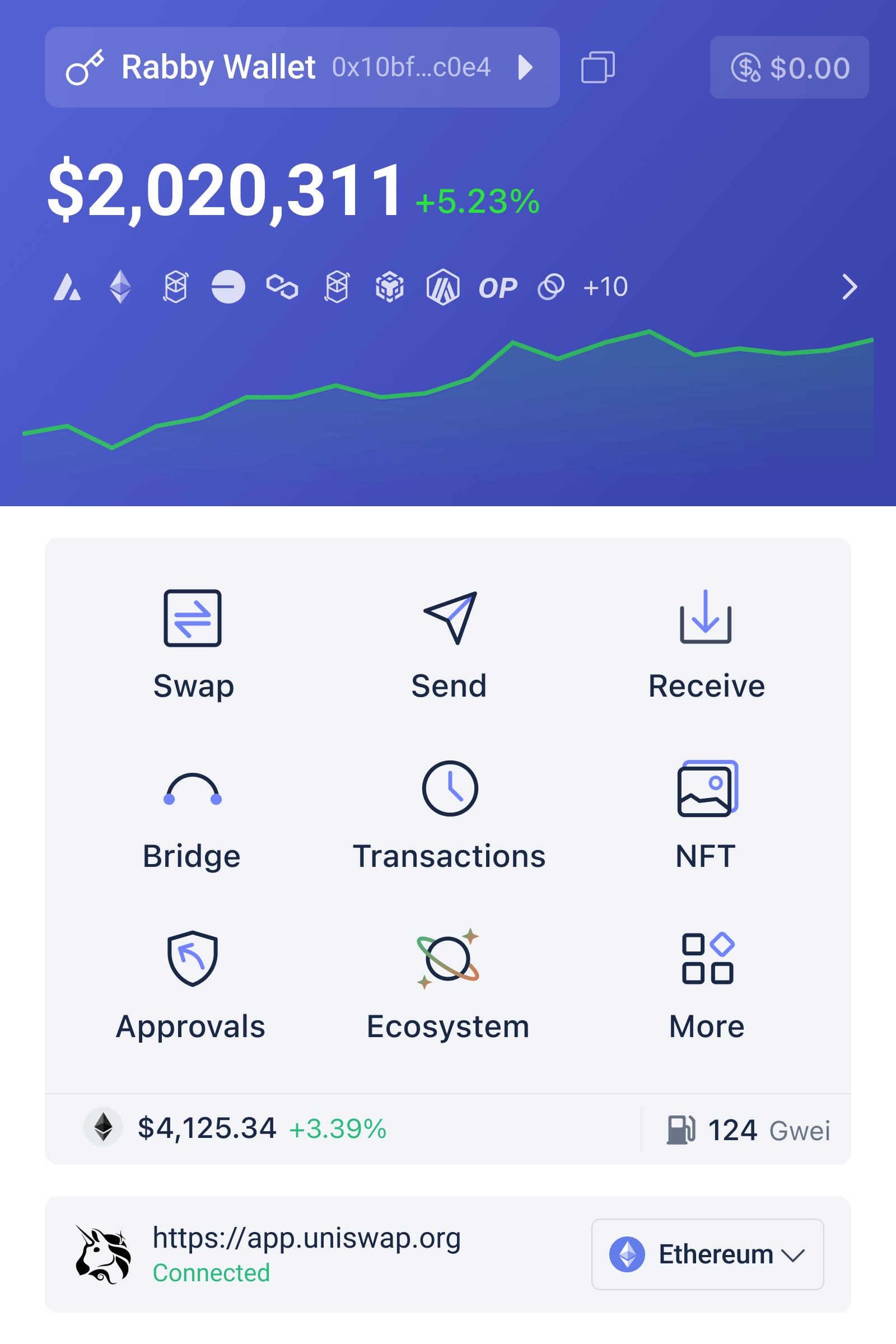
The recent Rabby project messaging describes the wallet as a tool for Ethereum and EVM networks, with extension access for browsers such as Chrome and Brave. That positioning is relevant to cross-chain users because a single browser wallet can be used across multiple compatible networks, but compatibility should not be confused with universal interoperability. An EVM wallet may manage accounts on several chains while still depending on separate bridges, exchanges, or applications to move value between them.
When preparing to install the browser extension, use a controlled process. Start from a source you have independently verified, check the publisher and domain carefully, and avoid search advertisements or unsolicited messages that imitate wallet download pages. If you are looking for installation guidance, the rabby wallet download page can be used as a reference, but the security principle remains the same: never enter a recovery phrase into a website, form, or support chat.
A legitimate wallet installation does not transfer funds by itself. The critical security boundary appears when the user imports or creates an account and begins signing transactions. A recovery phrase controls the account; a browser extension is only one interface for using that account. Anyone who obtains the phrase can generally recreate access elsewhere, regardless of which wallet application was originally installed.
Before a cross-chain transaction is signed, inspect the chain, token, recipient or contract address, amount, and requested allowance. Token symbols are not unique identifiers. Two assets can share a name while representing entirely different contracts. This is particularly important after bridging, when a destination asset may be a wrapped or protocol-specific representation rather than the original token.
Myth Two: A Wallet Warning Means the Transaction Is Malicious
Warnings deserve attention, but they are not always verdicts. A wallet may flag an unfamiliar contract, an unusual allowance, a simulation mismatch, or a transaction that cannot be fully interpreted. Some warnings arise because a new protocol has limited history or because a contract uses complex logic. Others may identify a genuine risk. The correct response is investigation, not automatic panic or automatic dismissal.
That limitation is fundamental. Transaction simulation can estimate what a contract is likely to do under current conditions, but it cannot guarantee future behavior, eliminate oracle risk, or prove that a protocol’s economic design is sound. A contract can be technically valid and still expose users to impermanent loss, liquidity withdrawal, governance changes, or an incentive structure that collapses when rewards decline.
Cross-chain systems add another boundary condition: finality is not uniform. Some networks confirm quickly but may have different assumptions about reorganization risk or message verification. A user may see a successful origin transaction while the destination-side process remains pending. Treating “confirmed on the first chain” as equivalent to “funds safely available on the second chain” is a common operational mistake.
A Reusable Decision Framework for DeFi Users
Before approving a route, ask four questions. First, what is the exact asset received on the destination chain? Second, what entities or contracts must be trusted for the transfer to complete? Third, what is the all-in expected cost, including slippage and future destination gas? Fourth, what happens if the route is delayed, partially completed, or interrupted?
The fourth question is often neglected because interfaces emphasize successful completion. Yet recovery procedures differ widely. Some protocols provide a claim transaction; some require waiting for a message; some may direct users to support documentation; and in poorly designed systems, recovery may be uncertain. A small test transfer can be rational when the route is unfamiliar, even though it adds an extra transaction and therefore an extra fee.
For larger transfers, position sizing is a security tool. Splitting funds across transactions or using a staged route can limit the damage from an incorrect chain, wrong token contract, or unexpected protocol behavior. It does not make a dangerous protocol safe, and it may increase fees, but it reduces the consequence of a single operational error.
US users should also keep records of the route, timestamps, assets sent, and assets received. Cross-chain activity can complicate cost basis and reporting because one apparent swap may contain a bridge transfer, a disposal, a receipt of a wrapped asset, and a later trade. Tax treatment depends on facts and applicable law, so transaction history should not be reconstructed from memory after the fact.
What to Watch as Cross-Chain Infrastructure Develops
If cross-chain systems become easier to use, the visible interface may increasingly hide more of the underlying routing. That could improve accessibility, but it creates a new educational challenge: fewer clicks do not necessarily mean fewer trust assumptions. The important signal to watch is whether interfaces disclose route composition, fees, permissions, finality expectations, and recovery paths clearly enough for users to make informed choices.
A plausible near-term scenario is greater competition among routes that combine bridges, decentralized exchanges, and network-specific liquidity. If that competition improves price discovery and reliability, users may benefit from better execution. If interfaces optimize only for speed or headline fees, they may encourage users to accept opaque contracts and fragile dependencies. The outcome depends less on the existence of more chains than on how transparently their risks are surfaced.
Rabby’s emphasis on Ethereum and EVM networks fits this broader transition: one wallet interface can make a fragmented environment feel more coherent. The unresolved question is whether convenience will be matched by comprehension. For sophisticated DeFi users, the strongest habit is not choosing the lowest quoted gas number. It is reading the route as a sequence of permissions, messages, liquidity decisions, and settlement assumptions.
Frequently Asked Questions
Does a cross-chain swap always require a bridge?
No. A user can sell an asset on one network, move value through a centralized exchange, and withdraw on another network, or use a protocol that combines liquidity and messaging in a different way. However, most self-custodial cross-chain routes involve some mechanism for transferring, representing, or sourcing liquidity across networks. The mechanism determines the trust and failure model.
How can I reduce gas costs when using a browser wallet?
Compare complete routes, avoid unnecessary approvals and repeated transactions, check both origin and destination fees, and consider congestion and liquidity. Do not reduce slippage protection merely to make a transaction appear cheaper. A failed or poorly executed transaction can cost more than a higher initial gas estimate.
Is installing Rabby enough to make cross-chain swaps safe?
No. A wallet can improve account and transaction management, but safety still depends on the protocol, smart contracts, bridge design, token contract, network selection, and the user’s signing decisions. Keep the recovery phrase offline, verify the installation source, and treat every approval as a permission that deserves review.
Leave Comment